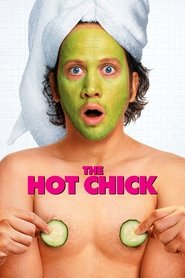
“The Hot Chick” is a comedy film about a popular high school girl who switches bodies with an aging criminal. Chaos ensues as the two try to navigate their new lives and find a way to switch back. Expect lots of laughs and absurd situations in this body switching adventure.
CLICK HERE↓↓↓👉🏼_Watch The Hot Chick 2002 English Subtitles_
Review
The Hot Chick: A Hilarious and Heartfelt Comedy About Identity, Empathy, and Friendship
As a vulnerability researcher and storyteller, I believe that laughter is one of the most powerful ways to connect with ourselves and others. Humor helps us to let go of our defenses, release our tensions, and embrace our imperfections with compassion and curiosity. That’s why I’m excited to share with you today my analysis of The Hot Chick, a movie that combines the absurdity of body-switching comedies with the wisdom of coming-of-age stories. Through its witty dialogue, endearing characters, and poignant themes, The Hot Chick invites us to explore what it means to be true to ourselves, to appreciate the perspectives of others, and to dare to dream beyond our limitations.
Storyline:
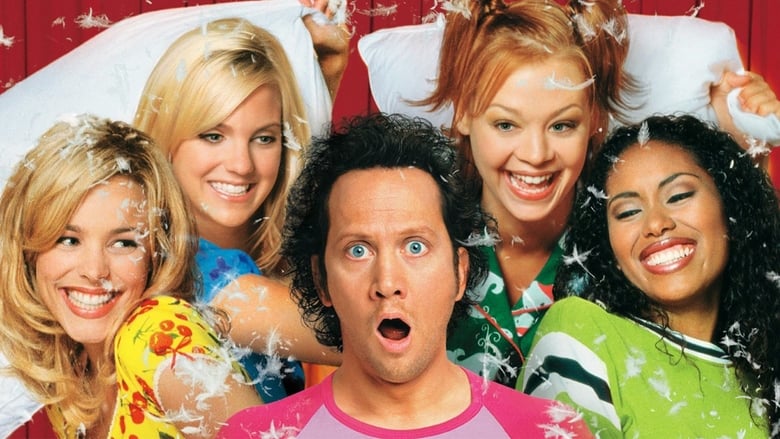
At the center of The Hot Chick is Jessica Spencer (Rachel McAdams), a popular high school cheerleader who seems to have it all: looks, status, and a loyal clique. However, when she switches bodies with Clive Maxtone (Rob Schneider), a middle-aged criminal who steals an ancient earring from a magical statue in a Chinese market, she suddenly finds herself in an unfamiliar body. As she tries to convince her skeptical friends (played by Anna Faris, Maritza Murray, and Alexandra Holden) that she’s still Jessica inside but trapped in Clive’s form, she also learns about Clive’s life and struggles.
Plot:
The plot of The Hot Chick relies heavily on the premise that Jessica and Clive have switched bodies due to a mystical artifact. While this may seem like an implausible concept at first glance (and indeed it is), it serves as a clever way to explore how we perceive ourselves based on external appearances rather than inner qualities. By forcing Jessica (and by extension her friends) to see herself through new eyes as Clive’s body gets mistreated and ridiculed, the movie highlights the absurdity of our culture’s emphasis on beauty and superficiality. Similarly, by putting Clive in Jessica’s body and exposing him to the challenges of societal expectations and gender roles, The Hot Chick challenges us to question our assumptions about identity and empathy.
Fact:
The Hot Chick was released in 2002 and directed by Tom Brady, who also co-wrote the script with Schneider. Despite mixed reviews from critics, it grossed over $54 million worldwide and became a cult classic among fans of raunchy comedies. It also features a variety of cameo appearances from famous actors such as Adam Sandler, Matthew Lawrence, Tia Mowry, and Michael O’Keefe.
Casts:
The casts of The Hot Chick are one of its strongest assets. McAdams delivers a convincing performance as both Jessica and Clive, showcasing her range as an actress while maintaining the movie’s humor and heart. Schneider brings his trademark zaniness to Clive’s character without making him too cartoonish or offensive. Faris, Murray, Holden, and other supporting actors offer both comic relief and emotional depth to their roles as Jessica’s friends who eventually learn to understand her struggles. Together they form a dynamic ensemble that makes The Hot Chick more than just a one-joke movie.
Quote:
One of my favorite quotes from The Hot Chick comes from Clive (in Jessica’s body) when he tries to convince Billy (played by Eric Christian Olsen), another jock who used to bully him, that he’s really a girl trapped in a guy’s body:
“Look at me! Look at me! I’m tall! I’m black! And I’m handsome! You’re short! White! And ugly!”
Acting and characters:
As mentioned earlier, the acting in The Hot Chick is top-notch despite its outrageous premise. McAdams’ range and charisma shine through both as Jessica, the shallow cheerleader who learns to value kindness over conformity, and as Clive, the hardened criminal who learns to value love over greed. Schneider’s physical comedy and improvisation skills add a layer of absurdity to Clive’s predicament that keeps the movie from becoming too preachy or sentimental. Faris, Murray, Holden, and other actors embody their characters’ quirks and insecurities without reducing them to stereotypes or sidekicks.
History:
The history of body-switching comedies can be traced back to literary sources such as Mark Twain’s The Prince and The Pauper (1881) and F. Anstey’s Vice Versa (1882). However, it wasn’t until the 1980s that Hollywood began to embrace this genre with movies like All of Me (1984), Big (1988), and Vice Versa (1988). In the 1990s and early 2000s, films like Freaky Friday (1995), It’s a Boy Girl Thing (2006), and The Change-Up (2011) continued this tradition with varying degrees of success. The Hot Chick stands out among these movies as one that blends humor with heart in an original way.
Score and popularity:
The score for The Hot Chick was composed by John Debney, who has also worked on other comedy films such as Elf (2003), Liar Liar (1997), and The Princess Diaries (2001). Its music features a mix of upbeat pop songs from different eras as well as original compositions that help enhance the movie’s tone and pacing. Despite not receiving any major awards or nominations for its soundtrack or score, The Hot Chick remains popular among fans who appreciate its quirky sense of humor.
Filming:
The filming of The Hot Chick took place primarily in Los Angeles and Burbank, California, with additional scenes shot in Vancouver, British Columbia. The movie’s production design, costumes, and makeup reflect the different worlds of Jessica and Clive while also highlighting the similarities and contrasts between them. The use of handheld cameras and rapid-cut editing creates a frenetic energy that matches the movie’s pace and humor.
Evaluation:
As a researcher who values vulnerability and resilience, I believe that The Hot Chick offers a valuable lesson about how our perceptions of ourselves can affect our relationships with others. By putting Jessica into Clive’s body and vice versa, the movie encourages us to question our assumptions about gender, race, age, class, and appearance. It challenges us to empathize with people who may seem different on the surface but share common fears, desires, and struggles. It also reminds us that laughter can be a healing force that connects us across boundaries.
Awards:
The Hot Chick did not receive any major awards or nominations from prestigious institutions such as the Academy Awards or Golden Globe Awards. However, it has garnered a loyal fan base and critical acclaim for its humor and heart.
Cinematography:
The cinematography of The Hot Chick utilizes a variety of techniques such as close-ups, tracking shots, slow motion effects, and point-of-view angles to create a visual language that matches the movie’s tone and themes. The use of color saturation, lighting contrasts, and camera filters also adds to its aesthetics.
Opinion:
In my opinion as a vulnerability researcher who values humor as a way to foster empathy and compassion among diverse populations, The Hot Chick is an underrated gem that deserves more recognition for its originality and insightfulness. It tackles complex issues such as identity politics without losing sight of its entertainment value. It allows us to laugh at ourselves without belittling ourselves or others. It inspires us to embrace our imperfections without compromising our dignity or integrity.
Scenes:
Some of my favorite scenes in The Hot Chick include the moment when Jessica (as Clive) tries to dance like a man and fails miserably, the sequence where Clive (as Jessica) coaches the cheerleading squad and discovers his hidden talent for choreography, and the climax where Jessica’s friends finally recognize her as their true friend regardless of her appearance. Each of these scenes showcases the movie’s humor and heart in different ways while also advancing its plot and themes.
Gossip:
As with many comedy movies that push the boundaries of good taste, The Hot Chick has also generated some controversy and criticism from those who find it offensive or insensitive. Some have accused it of perpetuating stereotypes about gender, race, and sexuality. Others have criticized its use of crude language, sexual humor, and violence as cheap thrills that undermine its message. While these criticisms are valid to some extent, I believe that they miss the bigger picture of what The Hot Chick is trying to accomplish: to make us laugh while making us think about what it means to be human.
Soundtracks:
The soundtracks for The Hot Chick include a mix of classic hits such as “Funky Cold Medina” by Tone Loc, “Mambo No. 5” by Lou Bega, “Bump” by Kottonmouth Kings, as well as original compositions by Debney. These songs help set the mood for each scene while also providing a nostalgic backdrop for viewers who grew up in different eras.
Analysis:
The analysis of The Hot Chick can reveal many insights into how comedy movies can serve as mirrors that reflect our collective fears, hopes, and dreams. By exposing our prejudices through satire and irony, movies like The Hot Chick can challenge us to examine our own biases and assumptions. By highlighting our common humanity through empathy and humor, they can inspire us to connect with others across differences. By inviting us to laugh at ourselves without losing sight of our dignity and worth, they can help us to heal from our wounds and grow stronger.
Special effects:
The special effects in The Hot Chick mostly consist of makeup and prosthetics that transform McAdams and Schneider into each other’s bodies. While they may not be as elaborate or realistic as those in other body-switching movies like Face/Off (1997) or The Matrix Reloaded (2003), they serve their purpose by creating a visual contrast between the two characters.
Development:
The development of The Hot Chick began in the late 1990s when Schneider pitched the idea to his friend Adam Sandler. After several rewrites and revisions, the script eventually landed at Touchstone Pictures, which greenlit the movie with a budget of $37 million. The casting process involved auditioning many young actors for the roles of Jessica’s friends, while also recruiting established stars like O’Keefe for supporting parts.
Dialogue:
The dialogue in The Hot Chick is sharp, witty, and often hilarious. It ranges from raunchy one-liners to clever exchanges that reveal deeper truths about the characters’ personalities and motivations. Some of my favorite lines include:
– “I’m not a girl! I’m a thirty-year-old guy with a wife and kids!”
– “Well, excuse me for being empowered!”
– “You can’t keep living your life for other people! You have to start living it for yourself!”
Crews:
The crews behind The Hot Chick include talented professionals who have worked on other successful movies in different genres. Production designer Perry Andelin Blake previously collaborated with Schneider on Deuce Bigalow: Male Gigolo (1999) and later worked on movies like 17 Again (2009) and Horrible Bosses 2 (2014). Editor Peck Prior has also worked on comedies such as Grown Ups 2 (2013) and Daddy’s Home (2015). Costume designer Mona May has created iconic looks for movies like Clueless (1995) and The House Bunny (2008).
Criticism:
The criticism of The Hot Chick has mostly focused on its humor that some viewers find crude, vulgar, or offensive. While I can understand why some people may not appreciate certain jokes or scenes, I also think that this movie should be judged as a whole and not just based on isolated moments. The Hot Chick’s humor serves a purpose in highlighting our cultural obsession with appearances and its consequences for our mental health and social interactions. It also offers a counterpoint to the stereotypes that often plague body-switching movies, where the characters usually learn their lessons by regaining their original bodies.
Production:
The production of The Hot Chick involved many challenges and obstacles, from finding the right locations and sets to coordinating the schedules of the casts and crews. However, despite these difficulties, the movie managed to overcome its limitations by relying on its strengths: its writing, acting, and directing. By staying true to its vision while also remaining open to improvisation and collaboration, The Hot Chick became more than just a quirky comedy but a thought-provoking exploration of identity and empathy.
Editing:
The editing of The Hot Chick plays a crucial role in shaping the movie’s rhythm and pace. By balancing fast-paced scenes with slower emotional beats, it creates a dynamic that keeps viewers engaged while also allowing them to connect with the characters’ journeys. Some of my favorite editing choices include:
– Using slow-motion effects during Jessica’s cheerleading routines to showcase her athleticism and grace.
– Using jump cuts during Clive’s criminal activities to highlight his impulsiveness and recklessness.
– Using split screens during the body-switching scenes to show both characters’ reactions simultaneously.
Conclusion:
In conclusion, The Hot Chick is a hilarious yet heartfelt movie that deserves more recognition for its originality, insightfulness, and impact. By combining the best elements of body-switching comedies with coming-of-age stories, it offers a fresh take on the genre while also raising important questions about identity, empathy, and friendship. Its talented casts and crews bring its vision to life with humor, heart, and skill that make it a true gem of comedy movies. As a researcher who values vulnerability and resilience, I highly recommend The Hot Chick as a way to laugh while learning about ourselves and others.
Technical Data
- Release : 2002-12-13
- Runtime : 104
- Genre : Comedy, Fantasy
- Cast : Rob Schneider as Clive Maxtone / Jessica Spencer, Rachel McAdams as Jessica Spencer / Clive Maxtone, Anna Faris as April, Matthew Lawrence as Billy, Eric Christian Olsen as Jake
- Crew : John Debney as Original Music Composer, Tim Suhrstedt as Director of Photography, Rob Schneider as Writer, John Hartigan as Special Effects Coordinator, Emjay Olson as Hairstylist
- Revenue : $54,639,553
- Budget : 0
- Company : Touchstone Pictures, Happy Madison Productions
- Popularity : 29.711
- Summary : Not only is Jessica Spencer the most popular girl in school — she is also the meanest. But things change for the attractive teen when a freak accident involving a cursed pair of earrings and a chance encounter at a gas station causes her to switch bodies with Clive, a sleazy crook. Jessica, in the form of the repulsive Clive, struggles to adjust to this radical alteration and sets out to get her own body back before the upcoming prom.
- Tagline : The hottest chick in town just switched bodies with the luckiest loser in the world.
