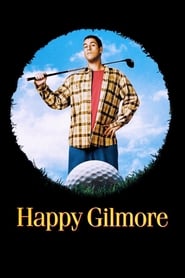
“Happy Gilmore,” a 1996 comedy film, is about a former hockey player who decides to try his hand at golf. He uses his unorthodox swing and his hockey skills to hit the ball further than anyone. Along the way, he must overcome obstacles, including the disapproval of other golfers and a villainous rival golfer. Happy must learn to control his emotions and channel his anger into his game if he wants to succeed on the green. In the end, Happy becomes a golfer with heart and earns the respect of everyone around him.
CLICK HERE⭣⭣⭣📽️_Watch Happy Gilmore 1996 English Subtitles_
Review
In “Happy Gilmore,” an American sports-comedy movie released in 1996, a rejected hockey player turned amateur golfer discovers he has a talent for hitting the ball far and straight – albeit with an unconventional technique – and sets his sights on becoming a professional golfer to save his grandmother’s house from being seized by the IRS. The plot follows Happy Gilmore, played by Adam Sandler, as he navigates the cutthroat world of golf, but not without facing obstacles along the way.
The first few scenes of the film reveal Happy’s inability to control his anger and unrestrained emotional outbursts. This character trait serves as a running gag throughout the movie. Despite various attempts to channel his energy positively, Happy finds himself getting into more trouble than before. He has no choice but to revert to what he knows best: unleashing an impressive drive that sends golf balls flying at impossible speeds.
With help from ex-golf pro Chubbs (Carl Weathers), an old acquaintance who lost his hand to an alligator during a tournament, Happy perfects his swing and gains entry into various competitions. As he progresses through the ranks, Happy encounters Shooter McGavin (Christopher McDonald), a greedy and arrogant golfer determined to win at any cost.
Despite being determined to defeat Shooter and make enough money to save his grandmother’s house from foreclosure, Happy struggles with maintaining his focus on multiple occasions due to both external disturbances and inner turmoil which manifest through humorous interactions with characters such as Donald (Joe Flaherty), the head of golf operations during one tournament who delivers memorable lines like “Jackass!” during their time together.
As Happy battles Shooter in the final tournament of the year, tensions reach boiling point leading up to their one-on-one match. Through sheer grit and determination – as well as some encouragement from fellow caddy Otto (Allen Covert) – Happy pulls off an incredible victory against all odds.
Throughout the narrative, director Dennis Dugan infuses charming quirkiness and endearing absurdity that makes the movie stand out from other sports comedies of the period. A prime example of this lies in Happy’s interactions with his grandmother (Frances Bay), who offers sage advice in her own unique way, as well as his love interest Virginia Venit (Julie Bowen), who is a public relations executive attempting to save Happy from himself.
The cast’s chemistry and comedic timing contributes immensely to the film’s charm and popularity. Adam Sandler’s portrayal of Happy amplifies the character’s quirks and outbursts to maximum comedic effect, while Christopher McDonald delivers a memorable performance as the film’s antagonist.
In terms of production, “Happy Gilmore” was shot primarily in Vancouver, Canada with some additional scenes filmed in places like Los Angeles. The cinematography captures various scenic locales both on the green and off it, making for an immersive viewing experience.
Critics were divided upon “Happy Gilmore” release; some praised its humor while others deemed it juvenile. However, over time it amassed a cult following and is now widely regarded as a classic comedy from the 1990s.
Overall, “Happy Gilmore” might not be high art; yet it remains an enduring crowd-pleaser thanks to its unorthodox premise, zany humor, and charismatic performances. It serves as a reminder that sometimes we all need to take ourselves less seriously and let loose once in a while – just like Happy did on those golf courses.
Technical Data
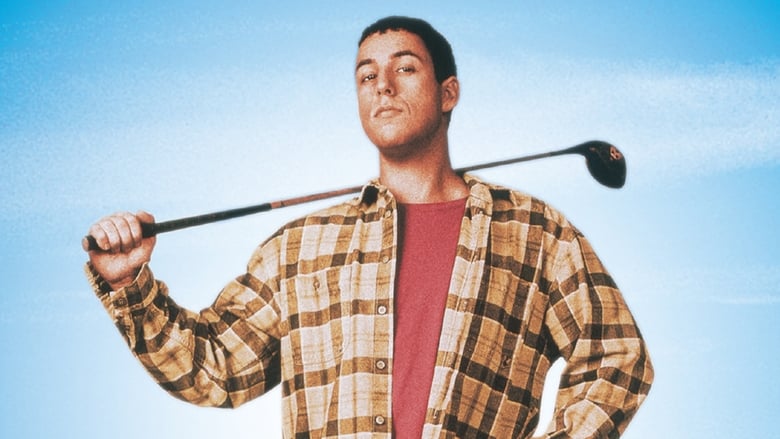
- Release : 1996-02-16
- Runtime : 92
- Genre : Comedy
- Cast : Adam Sandler as Happy Gilmore, Christopher McDonald as Shooter McGavin, Julie Bowen as Virginia Venit, Frances Bay as Grandma, Carl Weathers as Chubbs
- Crew : Doug Jackson as Foley Editor, Jeff Gourson as Editor, Brad Grey as Executive Producer, Mark Mothersbaugh as Original Music Composer, Richard C. Franklin as Foley Supervisor
- Revenue : $41,205,099
- Budget : $12,000,000
- Company : Universal Pictures, Brillstein-Grey Entertainment, Robert Simonds Productions
- Popularity : 25.323
- Summary : Failed hockey player-turned-golf whiz Happy Gilmore — whose unconventional approach and antics on the grass courts the ire of rival Shooter McGavin — is determined to win a PGA tournament so he can save his granny’s house with the prize money. Meanwhile, an attractive tour publicist tries to soften Happy’s image.
- Tagline : He doesn’t play golf… he destroys it.
