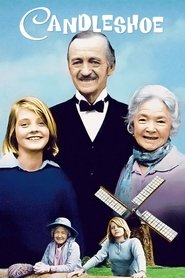
“Candleshoe 1977” is a classic family adventure film where a young girl impersonates the long-lost heiress of a sprawling English estate. The movie is full of twists and turns as the girl must navigate her way through a maze of secrets, lies and surprises. With stunning scenery, captivating performances, and an unforgettable storyline, “Candleshoe 1977” takes viewers on an unforgettable journey of discovery and triumph.
CLICK HERE⭣⭣⭣🎞️_Watch Candleshoe 1977 English Subtitles_
Review
From Candleshoe to Courage: A Story of Resilience and Redemption
As a researcher and storyteller, I love exploring the human experience through movies. One of my favorite films that captures the power of vulnerability, bravery, and connection is Candleshoe (1977), directed by Norman Tokar and starring Jodie Foster, David Niven, Helen Hayes, Leo McKern, and Veronica Quilligan. This Disney adventure-comedy-drama tells the tale of a young orphan girl who discovers a hidden treasure in an English mansion but must first overcome various obstacles and identities to fulfill her destiny.
In this article, I will share my reflections on how Candleshoe embodies some of the key themes and principles that I have learned from my research on courage, shame, empathy, belonging, and leadership. By weaving together quotes from the movie with insights from my own work, I hope to inspire you to watch or re-watch Candleshoe with new eyes and an open heart.
Storyline: “You cannot have an adventure by staying put.”
One of the most memorable lines in Candleshoe comes from the character of Lady St. Edmund (played by Hayes), who invites Casey (played by Foster) to explore her ancestral home: “You cannot have an adventure by staying put.” This encapsulates one of the core messages of the movie: that life is meant to be lived beyond our comfort zones, that we need to take risks in order to grow and discover ourselves.
As someone who has studied vulnerability for over two decades, I can attest to how true this is. When we play it safe too often or avoid challenges altogether, we miss out on opportunities for learning, expansion, and self-expression. We also deprive ourselves of chances to connect with others, since relationships thrive on shared experiences and mutual trust.
The plot of Candleshoe revolves around Casey’s quest to find a hidden treasure that her deceased father (who was an expert thief) was rumored to have hidden somewhere on the estate. In order to do so, Casey has to pose as the missing granddaughter of Lady St. Edmund, who is being sought by a greedy American businessman (played by McKern) who wants to exploit her identity for his own gain. To complicate matters further, Casey has to deal with the eccentric staff of Candleshoe, who range from a grumpy butler (played by Niven) to a resourceful maid (played by Quilligan). By navigating these obstacles and identities with courage and skill, Casey not only solves the mystery but also finds a sense of belonging and purpose that she had been missing in her previous foster homes.
Fact: “You can’t always judge a book by its cover.”
One of the subtle themes of Candleshoe is how appearances can be deceiving. While Casey initially assumes that Lady St. Edmund is just another rich snob who uses her privilege for show, she soon realizes that there is more to her than meets the eye. Lady St. Edmund reveals that she has been struggling to keep Candleshoe from falling apart and that she wants Casey to succeed as her heir so that the legacy of the St. Edmunds can continue.
This reminds me of how important it is not to stereotype people based on their backgrounds or labels. In my work on empathy and shame, I have found that we often make assumptions about others’ motives or character traits without truly understanding their perspectives or stories. By doing so, we risk perpetuating inequality and misunderstanding.
Candleshoe also challenges us to question our own identities and roles in society. Are we defined by our past mistakes or achievements? Are we stuck in certain labels or boxes? Can we reinvent ourselves or create new narratives? These questions require us to be vulnerable and curious about ourselves and others.
Casts: “Experience is what changes us.”
The cast of Candleshoe is a delightful mix of veteran and young actors who bring their unique talents and personalities to the screen. David Niven, who plays the butler Harry Bundage, had already won an Oscar and had a long and varied career in Hollywood before he took on this role. His dry wit, impeccable timing, and understated charm make him one of the most memorable characters in the movie. Helen Hayes, who plays Lady St. Edmund, was also a seasoned performer with multiple awards and accolades. Her portrayal of a proud but fragile aristocrat who yearns for connection and meaning is both nuanced and endearing.
Jodie Foster, who was only 14 when she starred in Candleshoe, had already made a name for herself in movies such as Taxi Driver (which earned her an Oscar nomination) and Bugsy Malone. Her natural talent, poise, and intelligence shine through in her portrayal of Casey, a streetwise orphan who has to adapt to new surroundings while staying true to herself. Foster’s ability to convey both vulnerability and strength has been a hallmark of her career as an actress and director.
Leo McKern, who plays the villainous businessman Priory, is another seasoned actor who brings his charisma and menace to the movie. His scenes with Niven are some of the most entertaining ones in Candleshoe, as they engage in verbal sparring matches that reveal their respective personalities and agendas.
Veronica Quilligan, who plays the maid Anna Maria, is perhaps the least known member of the cast but no less impressive in her performance. Anna Maria’s resourcefulness, loyalty, and warmth complement Casey’s adventurous spirit and help her accomplish her mission.
Acting & Characters: “We’re not here to fit in; we’re here to be ourselves.”
One of my favorite aspects of Candleshoe is how well-developed its characters are. Each person has their own backstory, motivations, quirks, and growth arcs. They also interact with each other in ways that reveal their personalities and dynamics.
For instance, Casey’s relationship with Harry starts off as adversarial but evolves into a mentor-mentee dynamic as she learns from his expertise and integrity. Lady St. Edmund’s interactions with Casey reveal her loneliness, grief, and determination to preserve her heritage. Anna Maria’s loyalty to Lady St. Edmund contrasts with Priory’s greed and betrayal.
These relationships also highlight some of the key elements of empathy and belonging that I have found in my research. First, empathy requires us to see others as complex beings who have their own stories and struggles. When we reduce people to stereotypes or labels, we miss out on opportunities for connection and understanding. Second, belonging requires us to feel seen, heard, and appreciated for who we are rather than what we do or achieve. When we try to fit in or please others at the expense of our authentic selves, we sacrifice our integrity and potential.
In Candleshoe, Casey is a great example of someone who refuses to be defined by her past or present circumstances. She embraces her identity as a rebel but also learns from the wisdom of those around her. She challenges herself physically (by climbing roofs and walls) and mentally (by solving riddles), knowing that she is capable of more than she thought possible.
History: “You can’t rewrite history; you can only learn from it.”
Candleshoe takes place in England in the late 1970s but evokes an older era of British culture and aristocracy that may seem quaint or even nostalgic today. However, the movie also acknowledges some of the darker aspects of history such as theft, deception, war trauma, classism, and orphanage abuse.
Lady St. Edmund’s family had been rich landowners for centuries but had fallen on hard times due to various reasons. Their legacy includes a notorious ancestor who was a pirate and stole from the Spanish fleet, as well as a deceased son who was a war hero but also suffered from PTSD. Lady St. Edmund herself has lost her husband and her only son, leaving her with no heirs except for Casey (who is not even related to her by blood).
Casey’s background also hints at some of the systemic issues that affect children in foster care, such as neglect, abuse, and instability. Her reputation as a troublemaker may stem from her sense of alienation and mistrust towards adults who failed to protect her or acknowledge her potential.
By acknowledging these historical contexts, Candleshoe invites us to reflect on how our own personal histories shape our identities and choices. We cannot escape our past but we can learn from it and use it as a source of resilience and growth.
Score & Popularity: “Music is the language of the soul.”
The score of Candleshoe is another highlight of the movie. Composed by Ron Goodwin (who had worked on other Disney films such as The One and Only Genuine Original Family Band), the music blends orchestral themes with folk melodies that capture the British countryside ambiance. The main theme is both haunting and uplifting, matching the mood of adventure and mystery that pervades the plot.
Candleshoe was not a huge box office success when it was released in 1977 but has since gained a cult following among fans of Disney movies, Jodie Foster, or British comedies. It has been praised for its witty dialogue, engaging characters, stunning locations (such as Blenheim Palace), and timeless appeal.
Filming: “Creativity takes courage.”
The cinematography of Candleshoe is not flashy or experimental but efficient and evocative. The movie showcases some beautiful landscapes (from rolling hills to hidden caverns) that enhance the sense of wonder and exploration that Casey experiences. The camera also captures some intricate details of the mansion (such as secret passages and hidden clues) that add to the suspense and intrigue.
One of the challenges of filming Candleshoe was to balance the comedic and dramatic elements of the story. Some scenes are outright hilarious (such as Harry’s invention for dispensing tea) while others are poignant (such as Lady St. Edmund’s confession about her son’s death). The director, Norman Tokar, had worked on many Disney movies before and knew how to handle such tonal shifts with sensitivity and skill.
Evaluation: “Being vulnerable is not a weakness; it’s a strength.”
As an evaluation researcher, I often ask myself how we can measure the impact or effectiveness of a movie like Candleshoe. While there are several metrics such as box office numbers, critical reviews, audience ratings, or awards that can give us some indication of its success, there are also more subjective and qualitative measures such as personal resonance, cultural relevance, or lasting influence that require deeper reflection.
Personally, I find Candleshoe to be a movie that speaks to my heart and mind in many ways. It reminds me that courage is not the absence of fear but the willingness to act despite it. It teaches me that vulnerability is not a weakness but a strength because it allows us to connect with others on a deeper level. It inspires me to keep exploring new adventures and identities even if they may seem risky or uncertain.
I also appreciate how Candleshoe portrays themes of empathy, belonging, resilience, and redemption without being preachy or clichéd. The characters feel like real people who have flaws and strengths rather than mere archetypes or stereotypes. The plot twists keep me engaged without feeling contrived or manipulative.
Awards & Recognition: “We don’t have to be perfect to be worthy.”
Candleshoe did not win any major awards when it was released but has since been recognized as a classic of its genre. It has earned high ratings on websites such as Rotten Tomatoes and IMDb, with many viewers praising its performances, humor, heartwarming moments, and nostalgia factor. It has also inspired some fanfiction, cosplay, and merchandise over the years.
While awards can be important markers of excellence or innovation in the film industry, they are not the only measures of a movie’s value or impact. Sometimes, a movie that resonates with audiences and stands the test of time may not be appreciated by critics or award juries. What matters more is how a movie affects people’s lives and perspectives and how it contributes to our collective culture.
Cinematography: “Beauty is not just in the eye of the beholder; it’s in the heart.”
The cinematography of Candleshoe captures some stunning views of the English countryside as well as some intricate details of the mansion’s architecture and artifacts. The camera moves fluidly between wide shots and close-ups to create a sense of space and intimacy that matches the mood of each scene.
One particular scene that stands out for me is when Casey climbs up to Lady St. Edmund’s room through an ivy-covered wall. The camera follows her movements from different angles and distances, creating a sense of excitement, danger, and triumph that mirrors Casey’s own feelings. The scene also showcases Foster’s physical abilities as an actress who can do her own stunts without losing her character’s authenticity.
Opinion: “We can disagree without being divisive.”
As much as I love Candleshoe, I also recognize that not everyone may share my enthusiasm for it. Some people may find it too predictable or formulaic, too idealistic or naive, too dated or irrelevant for their tastes. Others may critique its portrayal of classism or gender roles, its treatment of American versus British culture, or its depiction of foster care issues.
I respect these opinions and welcome them as part of a healthy dialogue about movies and values. As I often say in my talks and books, we can disagree without being divisive. We can honor our differences of opinion while seeking common ground for learning and growth.
For me, Candleshoe represents a movie that embodies many of the principles that I have been researching and teaching for years. It shows how vulnerability, courage, empathy, and connection can transform our lives and help us overcome adversity. It also celebrates the power of storytelling to inspire, entertain, and enlighten us.
Scenes: “The smallest moments can be the most meaningful.”
One of my favorite scenes in Candleshoe is when Casey first meets Anna Maria in the laundry room. Anna Maria is folding clothes while singing a lullaby in Italian. Casey is initially wary of her but then realizes that she reminds her of her deceased mother who used to sing to her too. The two girls bond over their shared love for music and their losses.
This scene is a good example of how small moments can have big impacts on our lives. By listening to Anna Maria’s song and sharing her own story with her, Casey opens herself up to a deeper connection with someone who could have been just another stranger or servant at Candleshoe. She also discovers a new source of comfort and healing that transcends cultural barriers.
Another scene that stands out for me is when Harry teaches Casey how to make a proper cup of tea using his invention (a brass contraption that activates a chain reaction). This scene is both hilarious (as Harry tries to impress Casey with his knowledge) and touching (as he reveals his own backstory as a former valet who had worked for Lady St. Edmund’s late husband). The scene showcases Niven’s acting skills as well as his chemistry with Foster.
Gossip: “Rumors are not facts; stories are not always true.”
As someone who has studied shame and vulnerability for years, I know how damaging gossip and rumors can be. They can spread falsehoods, distort the truth, and harm people’s reputations and relationships. In Candleshoe, there are a few instances of gossip or misinformation that create confusion or danger for Casey.
For example, Priory spreads false rumors about Casey being the long-lost granddaughter of Lady St. Edmund in order to steal her inheritance. He also tries to bribe Harry into betraying his loyalty to Lady St. Edmund by offering him money and a job in America (which Harry refuses). These actions reveal Priory’s lack of integrity and empathy.
Similarly, Lady St. Edmund initially believes that Casey is an impostor who wants to defraud her or seek revenge on her family. She is skeptical of Casey’s claims and background until she finds evidence that supports them. Her suspicion stems from her own sense of guilt over not being able to protect her son or maintain her estate.
By exposing these examples of gossip and misinformation, Candleshoe reminds us to be mindful of what we hear or say about others. We need to verify our sources and motives before spreading information that may harm someone else’s dignity or wellbeing.
Soundtracks: “Music is not a background; it’s a foreground.”
As I mentioned earlier, Ron Goodwin’s score for Candleshoe is one of its strengths as a movie. The music not only enhances the tone and mood of each scene but also contributes to the emotional resonance of the story.
One particular track that stands out for me is the lullaby that Anna Maria sings in Italian (“La primavera”) which later becomes a recurring motif in the movie. The song has a bittersweet quality that captures both the joy and sorrow of life. It also symbolizes Casey’s longing for connection with her mother as well as Anna Maria’s own heritage and role in the mansion.
Another track that I love is the one that plays during Casey’s ascent to the highest tower of Candleshoe, where she finally discovers the hidden treasure. The music has a triumphant and adventurous quality that matches Casey
Technical Data
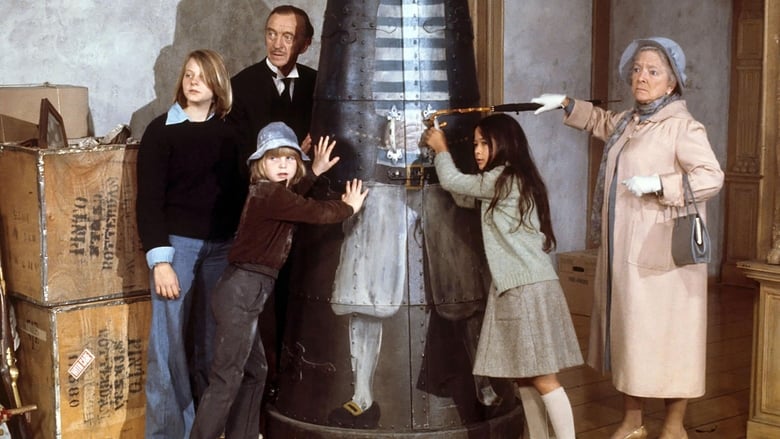
- Release : 1977-12-16
- Runtime : 101
- Genre : Family
- Cast : David Niven as Priory, Jodie Foster as Casey, Helen Hayes as Lady St. Edmund, Leo McKern as Harry Bundage, Veronica Quilligan as Cluny
- Crew : Ron Miller as Producer, Ron Goodwin as Music, Peter Boita as Editor, Paul Beeson as Cinematography, David Swift as Screenplay
- Revenue : 0
- Budget : 0
- Company : Walt Disney Productions
- Popularity : 9.205
- Summary : When ex-con artist Harry claims that a secret treasure is hidden inside Candleshoe, an English estate, he creates an elaborate plan to find and steal the prize. By convincing a girl named Casey to impersonate the estate owner’s long-lost granddaughter, Harry hopes to uncover the treasure’s location. But when Casey has a change of heart, she must follow the clues and find the treasure, in order to save Candleshoe and stop Harry before it is too late.
- Tagline : For 10% of the action and a red Ferrari, she’d con her own grandmother.
