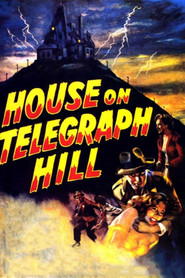
“The House on Telegraph Hill” is a tautly suspenseful film in which the past and present collide. In the wake of World War II, a young woman named Victoria Jones (Valentina Cortese) emigrates from Europe to San Francisco and discovers that her husband is dead. She is given custody of his young son and moves into his deserted family mansion on Telegraph Hill, where secrets abound. Gradually, Victoria learns the truth about her husband’s death and finds herself in mortal danger as she struggles to protect herself and the child from a sinister antagonist. The film’s use of shadowy cinematography and dramatic music adds to its sense of menace and unease.
CLICK HERE⭣⭣⭣📺_Watch The House on Telegraph Hill 1951 English Subtitles_
Review
As someone who loves a good thrill, I was thrilled to discover “The House on Telegraph Hill.” This 1951 classic directed by Robert Wise had me on the edge of my seat from start to finish. But what I found most compelling about this movie wasn’t just the suspenseful plot and masterful performances by the cast – it was how it touched on themes that are still relevant today.
At its core, “The House on Telegraph Hill” is a story of survival and redemption. The film centers around Victoria Kowelska (played brilliantly by Valentina Cortese), a Polish concentration camp survivor who travels to San Francisco to live with her only surviving relative – an aunt she has never met. But when she arrives, she discovers that her aunt has been killed in a fire and left her fortune to her young son. Victoria assumes her aunt’s identity in order to gain custody of the child and escape the horrors of her past.
It’s easy to see why this film was so popular when it was released – audiences were captivated by its twisting plot and nail-biting tension. But what really struck me about “The House on Telegraph Hill” was how it explored themes of trauma, identity, and the desire for redemption.
Victoria is a complex character with a lot of emotional baggage. She is haunted by memories of the concentration camp and desperate to leave her past behind – but as she becomes more entangled in her aunt’s life, it becomes clear that running from your problems doesn’t always work. This is a lesson that still resonates today, as so many people struggle with their own traumas and look for ways to escape or ignore them.
But despite Victoria’s flaws, she is also incredibly brave and resourceful. She uses all of her wits to navigate the dangerous world around her, always remaining one step ahead of those who seek to harm her or take advantage of her situation. Her journey towards redemption and self-acceptance is inspiring, and offers a powerful message about the human capacity for resilience and growth.
Of course, it’s not just the story that makes “The House on Telegraph Hill” such a memorable experience – the filmmaking itself is top-notch. The cinematography by Lucien Ballard captures the beauty and danger of San Francisco with stunning visuals, while Dimitri Tiomkin’s score amps up the tension at every turn. And the performances by Cortese, Richard Basehart (who plays Victoria’s complicated love interest), and William Lundigan (who plays a dogged investigator) are all top-notch.
All in all, “The House on Telegraph Hill” is a classic film that still holds up today. Its themes of trauma, identity, and redemption are timeless, while its suspenseful plot and masterful filmmaking make it a must-watch for any fan of classic cinema. As Brené Brown writes in her book “Daring Greatly,” vulnerability can be terrifying – but it can also be incredibly rewarding. And perhaps that is what makes this film so compelling – it takes us on a journey through some of our most vulnerable places, but ultimately leaves us feeling hopeful and inspired.
Technical Data
- Release : 1951-05-12
- Runtime : 93
- Genre : Drama, Mystery, Thriller
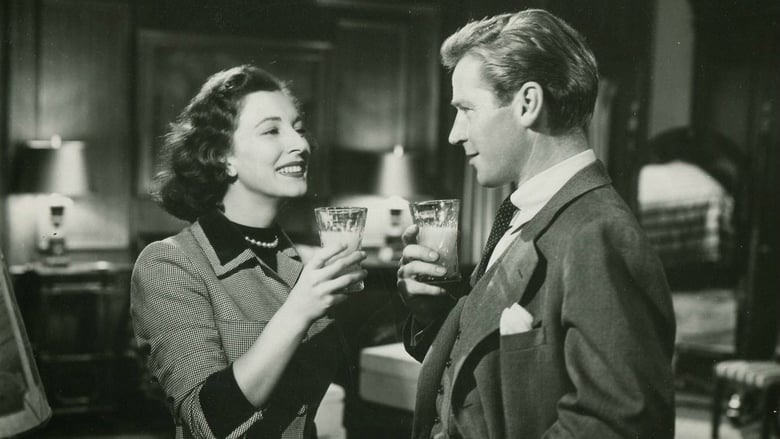
- Cast : Richard Basehart as Alan Spender, Valentina Cortese as Victoria Kowelska, William Lundigan as Major Marc Bennett, Fay Baker as Margaret, Gordon Gebert as Christopher
- Crew : Robert Wise as Director, Robert Wise as Additional Writing, Lyle R. Wheeler as Art Direction, Lucien Ballard as Director of Photography, Alfred Newman as Music Director
- Revenue : 0
- Budget : 0
- Company : 20th Century Fox
- Popularity : 5.657
- Summary : Concentration camp survivor Victoria Kowelska finds herself involved in mystery, greed, and murder when she assumes the identity of a dead friend in order to gain passage to America.
- Tagline : Shame is the mistress of this house and betrayal its master!
